
I earned my PhD in History from the University of South Carolina in 2021. I also hold a MA in Public History from UofSC along with an MA in History from the University of Lynchburg. My areas of focus are Southern history, African American history, environmental history, and public history. In my time in graduate school, the most important lesson I learned is this:
History is not for wielding power over others, which is how historical memory operates. Instead, the practice of history exists to build others up through including all voices in our narrative. We have a responsibility as professionals to check our privileges and lift the voices of those marginalized.
In my work as a historian, I believe that all of our stories matter, and it is vital to know the histories of where we’re from as they shape us, too. My research and writing from graduate school reflect these values, and my future projects will, too.
Dissertation Research
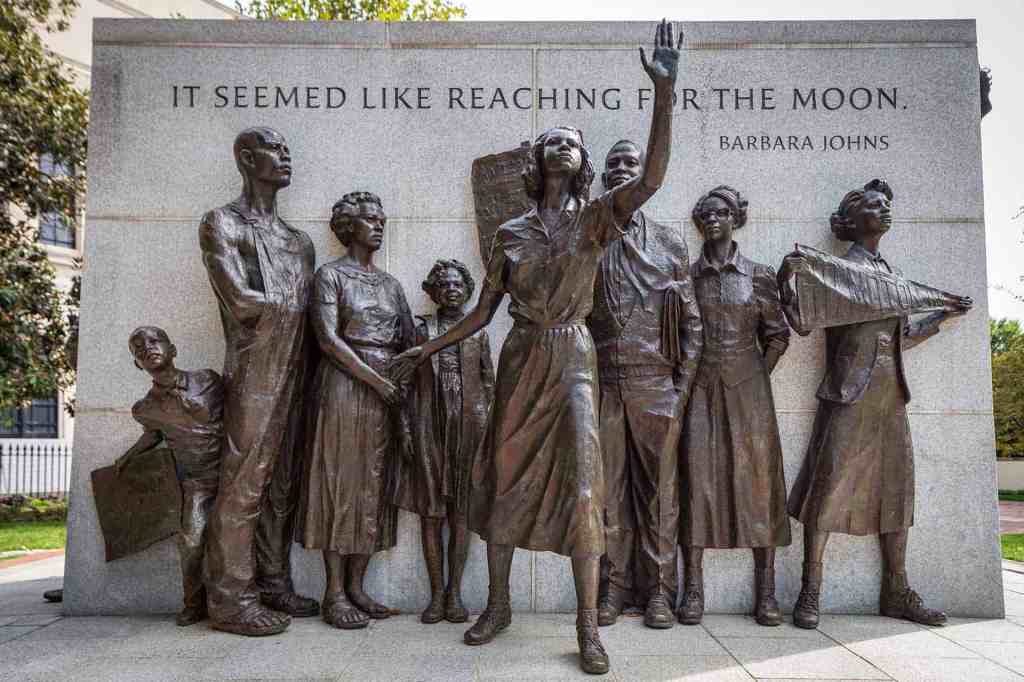
My dissertation compares two local civil rights movements in Southside Virginia – Prince Edward County and Danville. I tell the story of how high school students organized to fight against the “Virginia Way” of white supremacy and Jim Crow segregation in their towns during the 1950s and 1960s.
In July 1963, Martin Luther King, Jr. spoke in Danville and said, “[I have] seen some brutal things on the part of policemen all across the South, but very seldom if ever have I heard of a police force being as brutal and vicious as the police have been here in Danville, Virginia.”
Having grown up less than an hour from Danville, I did not learn that Martin Luther King, Jr. came to Danville to support the local movement in 1963 until after I graduated from college (and I was a history major at a public Virginia university). Nor did I learn that Prince Edward County (also an hour from home) was part of the Brown v. Board of EducationSupreme Court case until college. I wondered why I learned more about inconsequential skirmishes in the Civil War across Southside than events that held much more national historical significance.
In my research in these two movements, I found that the political and social traditions hid the more insidious forms of white supremacy. White segregationist politicians employed methods, cloaked as the “Virginia Way” of civility and gentility, that crippled civil rights and labor organizing and protest. However, the ingenuity and courage of high school students galvanized Black communities in Southside Virginia to start fighting against the Virginia Way through legal means and direct action protests. While their efforts did not produce immediate results, the work of these students brought a tide of change to the region.
Public History Projects –
South Carolina State Parks
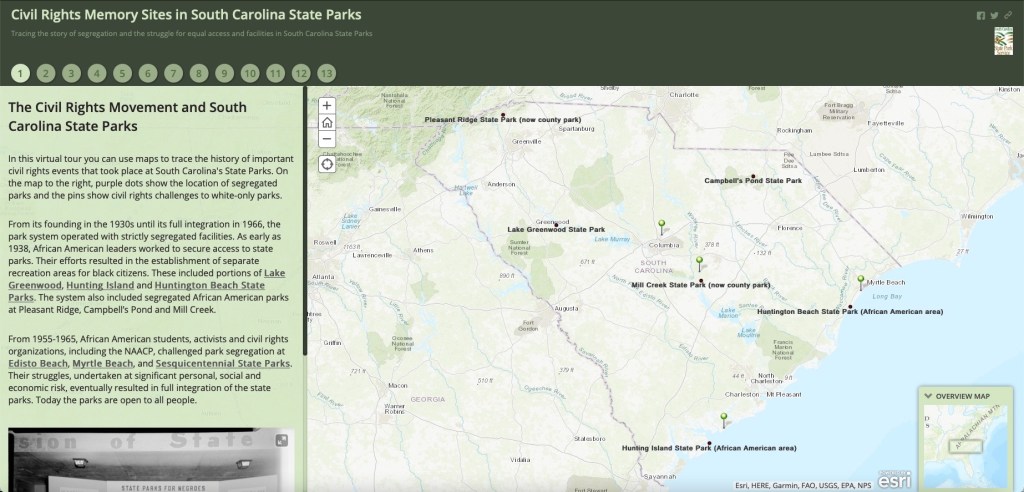
While completing my MA in Public History at UofSC, I had the opportunity to work with South Carolina State Parks in the Cultural Resources office as an exhibit developer. The park system had begun the process of interpreting the civil rights history of various parks and its integration efforts in the 1960s. What began as a class project for me on the 1961 effort to integrate Sesquicentennial State Park in Columbia turned into a part-time job working on developing a fuller interpretation of civil rights history for the whole park system.
Through my time as an exhibit developer, I created several online ArcGIS Story Map exhibits in addition to revamping many of the outdoor historical waysides at various parks. “Civil Rights Memory Sites in SC State Parks” is an online virtual tour of all parks in South Carolina with civil rights history that utilizes mapping, historical photos, and links to multimedia resources. These digital exhibits make this history accessible to park visitors and anyone interested in this history.
Public History Projects – UofSC Center for Civil Rights History and Research
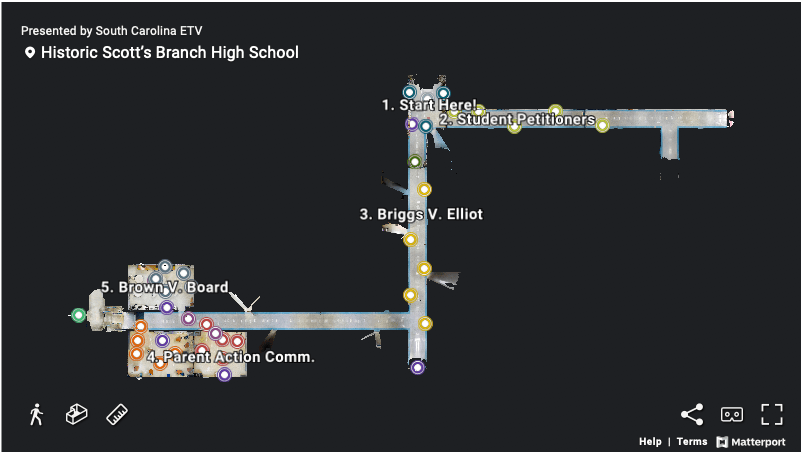
As I moved into the dissertation phase of my Ph.D. program, I took an assistantship with UofSC’s Center for Civil Rights History and Research. The Center’s mission is to make the civil rights history and story of South Carolina known and to celebrate the movement’s legacy. To that end, I worked on all sorts of projects, but my favorite was creating a virtual teachers’ institute that partnered with SC ETV to create virtual reality tours of some of South Carolina’s most important educational civil rights sites. This project was born during the COVID-19 pandemic, and it forced our team to think creatively to bring the history of these places to K-12 teachers and students in a safe and accessible form.
 Emily Martin Cochran