
Having been in education for the past 6 years, every May I find myself contemplating what to do with the 2-3ish months I have “off.” In summer, I typically have lots of unstructured time. This summer in particular, I wanted to make sure I didn’t waste this time. Luckily, I secured an internship at my hometown’s local museum (more on that in another post) that has allowed me some time to work on some research, writing, and editing of my own work.
One of my specific academic goals for this summer is to do some more background research on civil rights history in Virginia, which I got the opportunity to do last month. My friend LaTonya (a Wahoo/UVA alum) told me about a talk that Ed Ayers was doing at High Street Baptist Church in Danville, Virginia (the subject of my MA thesis) on the roots of segregation in Virginia, sponsored by History United, a project of the Virginia Foundation for the Humanities. We drove the 40 minutes to Danville and High Street Baptist Church (which was amazing to visit having read so much about it and its role in the 1963 local movement).
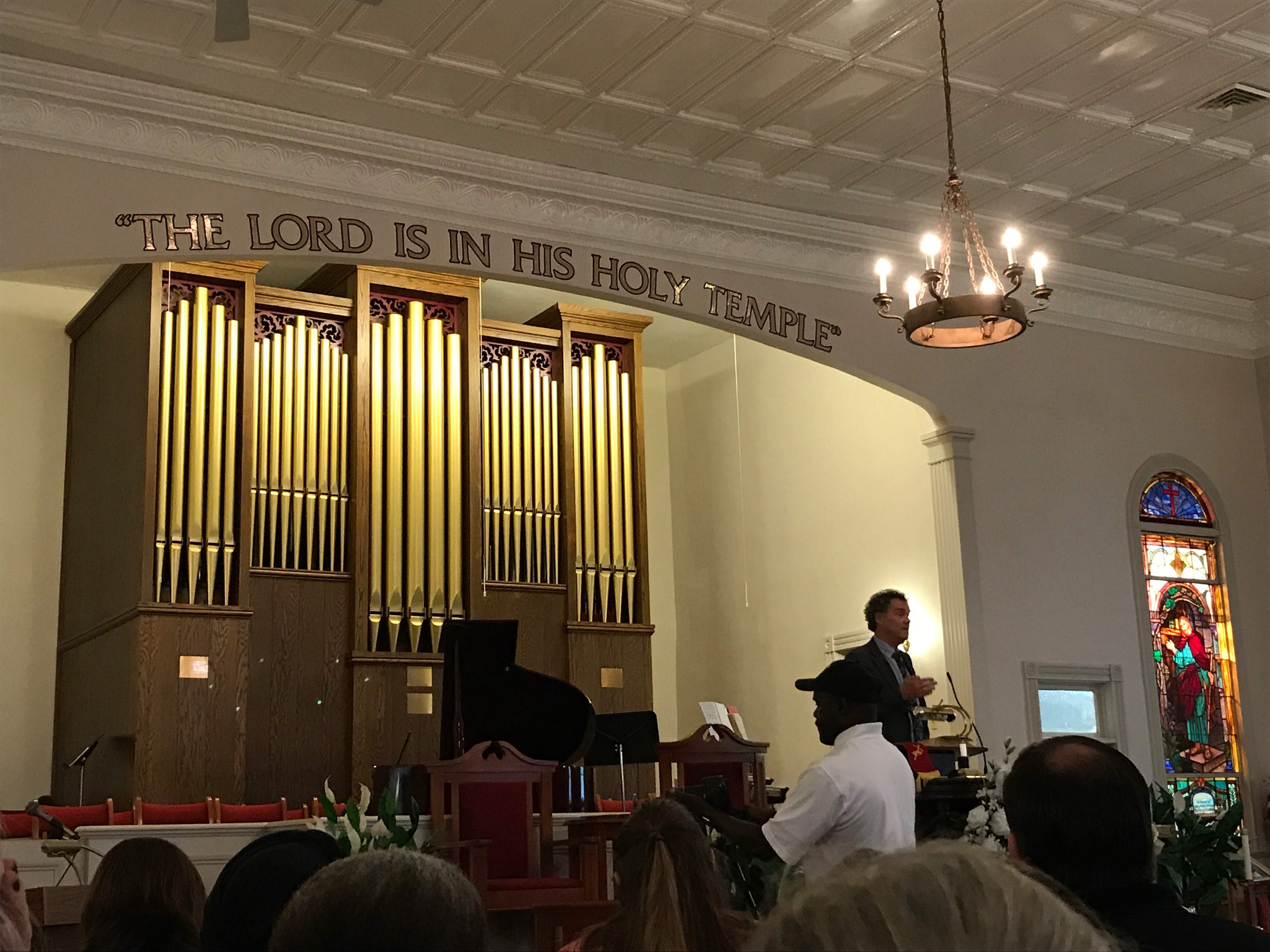
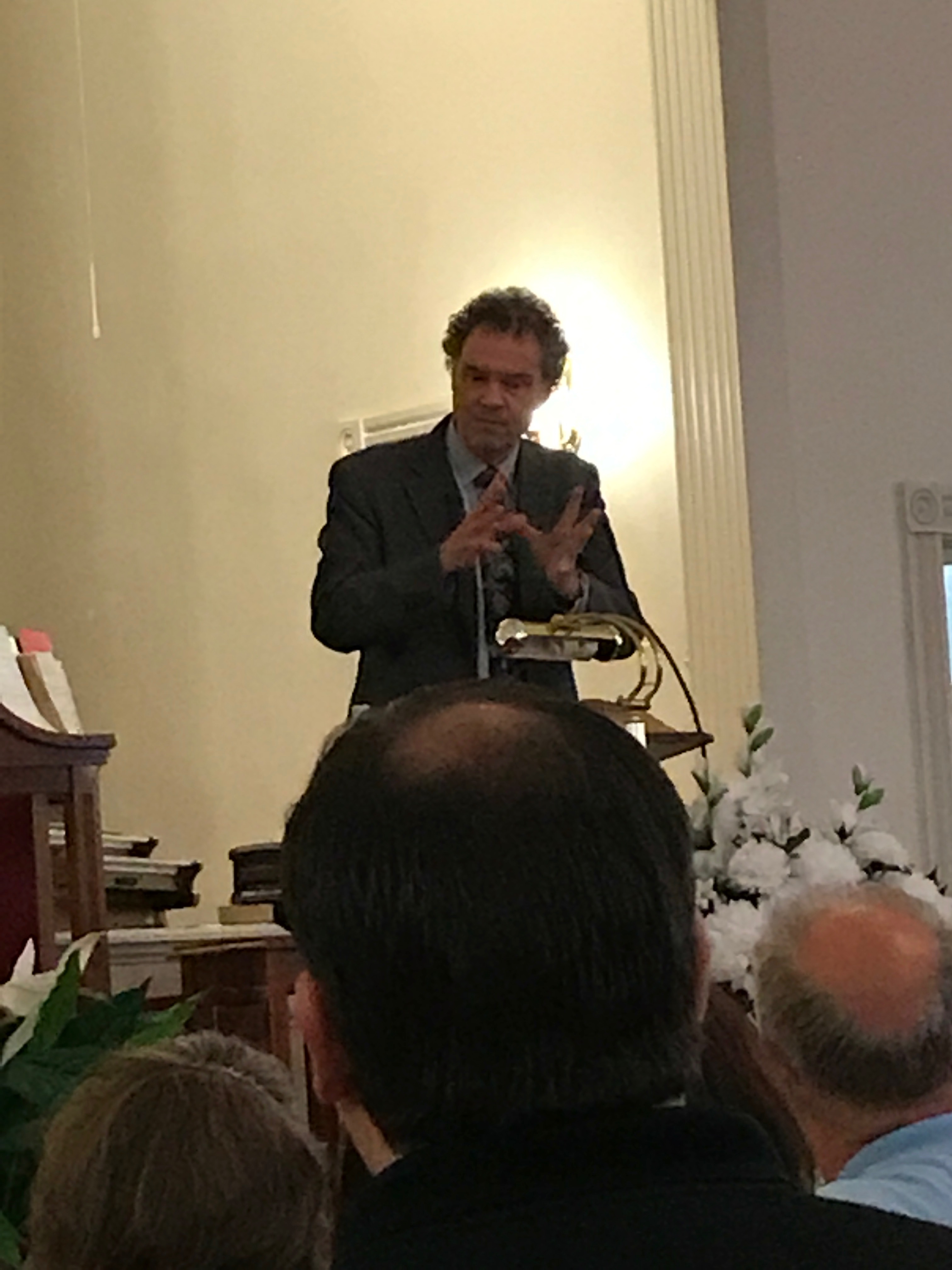
I thoroughly enjoyed Dr. Ayers’s talk as it was very informative and helpful for my own research. I took notes, so below are some main points I took away:
- Generally, racism is like a virus – it adapts to its host. This is true of Virginia and the country after the Civil War. Segregation was not immediately evident at emancipation. The first institutions to segregate were churches, cemeteries, and hotels. However, legalized segregation appeared at the beginning of the twentieth century because of enormous social change in the areas of work, commerce, politics, and travel.
- Social roles changed drastically after the Civil War because of population shifts and new forms of travel like the railroad, putting white and black people into closer proximity and equal social status. The black population of Danville grew, which gave white Danvillites high social anxiety. White progressives responded to this anxiety by advocating for social norms to be dictated by the law. Segregation then began in localities and spread statewide because of railroads. Railroad travel saw the evolution of the first and second class to segregated cars. Integrated cars prompted violence at multiple stops, and this violence led to statewide legislation to maintain social order.
- Political tensions carried over from Reconstruction also helped cement segregation. One of the major political controversies from this time was if debt should be paid from the Civil War. The traditional Southern Democrats felt it would be dishonorable not to pay it and use the state’s revenue for progressive causes like public education. The Readjuster Party in Virginia was a coalition of progressives and many black politicians and voters that supported not paying the Civil War debt in favor of supporting public institutions. This party gained control of Danville, and a clash between the Readjusters and Democrats led to a massacre in 1883, stemming from social anxiety about black equality.
- White people felt acts of violence against black people were the result of not having a legally dictated social system. This violence in Danville became a rallying cry for segregation to restore social order, lest another massacre happen somewhere else. Therefore, when the Democrats came back into power in the late 1880s, they dictated segregation laws (in a progressive manner) and disenfranchised black voters.
- However, (as Dr. Ayers’s main points emphasized) there is never a time that African Americans don’t fight this discrimination. Dr. Ayers’s ended by asking and answering this question: how is it that the most oppressed group can throw off the system? 1) They are not defined by their oppression and 2) They found strength in their community to resist. [Ed Ayers, “The Roots of Segregation,” High Street Baptist Church, Danville, Virginia, June 9, 2017.]
I had previously known about the 1883 Danville massacre (for more information, see this article) through my research of the area, but I had not known about the political background behind the massacre involving the Readjuster party and its resistance to paying the war debts. Not only was the massacre an attack on black social equality, but also their political participation and their access to public institutions. From my own research, I can see that the white resistance to the 1963 movement mirrors the 1883 massacre.
I’m looking forward to the next event that History United is sponsoring in my hometown – a dinner that will feature a talk by Dr. Charles Dew on his latest book, The Making of a Racist. It’s exciting that even in Southside Virginia, people are taking steps to address its history in hopes of making racial relations better here in the present.

